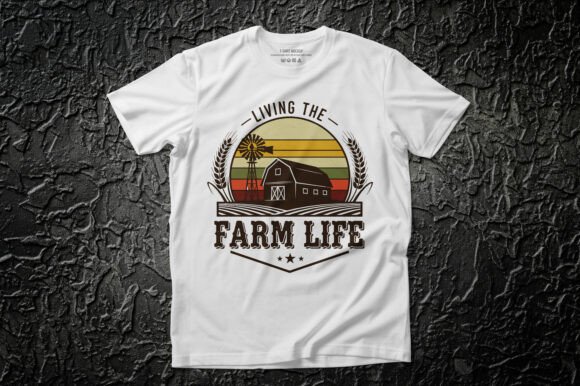
Living the Farm Life Barn Shirt
A Designer’s First Look: Charm With Clear Intent
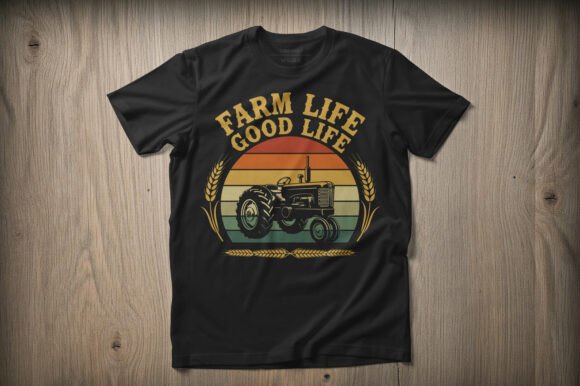
When I opened Living the Farm Life Barn Shirt, my first thought wasn’t “cute” — it was “intentional.” The barn silhouette anchors the composition, clean and confident, with subtle grain-sack texture in the background and that warm, approachable font wrapping around like a handwritten note pinned to a weathered post. It doesn’t shout “farm” — it leans in, quietly confident. That matters. As an embroidery designer who’s stitched everything from baby onesies to boutique aprons, I know this kind of restraint translates directly into stitchability and customer trust.
Where This Design Naturally Lands (and Why)
I recently used Living the Farm Life Barn Shirt on a set of heavyweight cotton tote bags for a local homesteading co-op. No custom lettering, no extra flourishes — just the design centered on the front panel. The result? Instant recognition, zero confusion, and a handmade product that felt both personal and professional. It worked because the layout breathes: generous negative space around the barn lets satin-stitched outlines pop without crowding, and the text curves with natural rhythm — not forced geometry. That makes it ideal for custom apparel, embroidered patch applications, and even sweatshirt embroidery where bulk needs to stay minimal.
Real-World Performance Across Fabric & Form
This isn’t a one-size-fits-all machine embroidery design — but it *is* adaptable, if you respect its balance. On medium-weight t-shirts and tea towels, the fill stitch density holds up beautifully without puckering. On soft fleece baby blankets? I added a light tear-away stabilizer beneath a cutaway base — and the barn outline stayed crisp, no thread nesting. For caps or curved surfaces, I’d recommend scaling down slightly and skipping the outer wheat stalks (they’re decorative accents, not structural), keeping focus on the barn + quote core. And yes — it reads clearly on dark fabric, especially with cream or oatmeal thread. I tested it in black-and-white mockups first; contrast held. That’s non-negotiable for any digital embroidery file meant for commercial use.
Where to Proceed Thoughtfully
- Small hoop sizes: The full layout fits comfortably in a 5×7 hoop, but tightens in 4×4. Prioritize the barn + “LIVING THE FARM LIFE” line only — skip the secondary wheat motif if space is limited.
- Thin or stretchy fabric: Avoid direct stitching on lightweight jersey without proper cutaway stabilizer. The text curves demand stability — wobble here blurs readability.
- Textured fabrics (like burlap or heavy linen): Test first. The satin-stitched barn edges can catch on loose weaves. A floating stabilizer layer helps.
- Frequent-wash items (baby clothes, kitchen towels): Confirm thread colorfastness. Cotton-rich threads hold up better than rayon under repeated laundering.
What It Adds — and What It Doesn’t Pretend To Be
Living the Farm Life Barn Shirt elevates a simple garment into a story — but it doesn’t overpromise. It won’t carry complex gradients or photorealistic detail (it’s a Graphics-style T-Shirt Designs asset, not a digitized portrait). What it *does* deliver is clarity, cohesion, and quiet confidence. Customers recognize authenticity faster when stitching feels intentional — not crowded, not fussy, not trying too hard. That builds customer trust, especially for Etsy sellers and small shop products where handmade presentation is part of the value.
For craft business owners, this design works double duty: as a ready-to-stitch embroidery project and as clean design assets for printable mockups or social media banners. Its balanced proportions scale well across formats — whether you’re prepping a holiday embroidery kit or branding a line of nursery decor.
Practical Designer Notes Before You Stitch
- Test on scrap fabric first — especially if using textured or dark materials.
- Check thread color contrast in natural light, not just screen preview.
- Review stitch density — dense fills look rich on sweatshirts but may stiffen lightweight tees.
- Confirm hoop size compatibility before digitizing adjustments.
- Inspect small details at 200% zoom: are wheat stalk tips clean? Does the barn roof edge hold definition?
- Try black-and-white mockups to verify legibility on light/dark backgrounds.
- Use proper stabilizer — medium cutaway for knits, tear-away for stable wovens.
- Verify licensing before selling finished items or bundling as part of a digital product. This design is built for real use — but rights matter.
Final Thought: A Design That Serves the Maker
Living the Farm Life Barn Shirt isn’t flashy — and that’s its strength. It’s a grounded, thoughtful machine embroidery design that respects the craft, the fabric, and the person wearing or gifting the finished product. Whether you’re stitching a personalized gift for a retiring rancher, building a cohesive line of boutique aprons, or creating a holiday embroidery collection for your Etsy shop, this design arrives ready to contribute — not complicate. It’s the kind of asset that earns repeat use, not shelf time. And in this industry? That’s the highest compliment.